If you're a cardiologist evaluating whether cardiac PET/CT makes financial sense for your practice, the reimbursement question is likely the first one you're asking. And it should be — because the numbers are significant.
Based on actual Medicare claims processed through Noridian Healthcare Solutions (Jurisdiction E, covering California, Hawaii, Nevada, and 10 additional western states), a single cardiac PET/CT study reimburses $2,710.86 at 80% Medicare — compared to just $653.52 for a comparable SPECT study. That's a 4.2x difference per patient.
In this guide, we're going to break down every CPT code, every dollar amount, and every billing nuance so you can make an informed decision about cardiac PET for your practice. These aren't hypothetical numbers from a fee schedule PDF — these are real reimbursement figures from actual claims.

What a Cardiac PET/CT Study Actually Reimburses: Code by Code
Here's what Medicare allows and pays for a complete cardiac PET/CT myocardial perfusion study with blood flow quantification, based on 2025 Medicare Physician Fee Schedule rates for the Los Angeles-Long Beach-Anaheim locality (Area 18):
Source: CMS Physician Fee Schedule Search Tool, 2025, MAC Locality 0118218 (Los Angeles-Long Beach-Anaheim). Radiopharmaceutical pricing from Noridian Medicare Radiopharmaceutical Fee Schedule. A9555 (Rubidium-82) priced at $520.75 per unit under the Contractor Status-C Fee Schedule, Area 18 (Los Angeles and Orange Counties).
The 20% patient responsibility ($691.55) is typically covered by secondary insurance (such as TRICARE for Life or Medigap), resulting in full collection of the $3,457.73 allowed amount in many cases.
How Does That Compare to SPECT? The 4.2x Multiplier
This is the comparison most cardiologists want to see. Here's how a standard SPECT MPI study stacks up against the PET/CT study above:
Let's put that in annual terms. If your practice currently performs 200 SPECT studies per year, that's roughly $130,704 in Medicare reimbursement. If those same 200 patients received PET/CT instead — and research from the American Society of Nuclear Cardiology (ASNC) shows that 30-35% of SPECT patients meet clinical criteria for PET — you're looking at:
- 60-70 patients converted to PET/CT = $162,651 to $189,760 in additional reimbursement per year
- Full 200 patients on PET/CT = $542,172 in total reimbursement (vs. $130,704 for SPECT)
That's not a marginal improvement. That's a 4.2x revenue increase from the same patient volume.
Understanding the CPT Codes: What Each One Covers
If you're new to cardiac PET billing, here's what each code represents and why it matters:
CPT 78431 — PET/CT Myocardial Perfusion Imaging
This is the primary imaging code. It covers the PET myocardial perfusion study (rest and stress) performed with concurrently acquired CT for attenuation correction. This is the highest-value code in the study at $2,168.04 allowed.
For 2026, CMS has kept CPT 78431 in its current APC grouping under the Hospital Outpatient Prospective Payment System (HOPPS), maintaining stable reimbursement. The Physician Fee Schedule rate for the professional component (modifier 26) is $89.87 for the LA locality.
CPT 78434 — Myocardial Blood Flow Quantification
This add-on code covers absolute quantification of myocardial blood flow (MBF) — a capability unique to PET that SPECT cannot offer. MBF quantification detects balanced ischemia (three-vessel disease) that standard perfusion imaging can miss.
In January 2026, ASNC expanded its clinical position statement to recommend PET with blood flow quantification for all patients with suspected coronary artery disease — not just select clinical scenarios. This makes 78434 an essential part of every PET study, not an optional add-on.
CPT 93015 — Cardiovascular Stress Test
This code covers the supervision, interpretation, and report of the stress test component (either exercise or pharmacologic). At $80.24, it's a smaller part of the total, but it's a code your practice is already billing for SPECT — so there's no new learning curve here.
HCPCS A9555 — Rubidium-82 (Rb-82) Radiopharmaceutical
The Rb-82 radiopharmaceutical is billed per dose, and a standard rest-stress study requires two doses (2 units). Under the Noridian Medicare Contractor Status-C Fee Schedule, Rb-82 is currently priced at $520.75 per unit for Area 18 (Los Angeles and Orange Counties).
Important 2025 HOPPS change: CMS now pays separately for diagnostic radiopharmaceuticals costing more than $630 per day under HOPPS — a landmark change effective January 1, 2025. This means the radiopharmaceutical cost is no longer bundled into the procedure payment for hospital outpatient settings, improving total reimbursement.
HCPCS J2785 JZ — Regadenoson (Lexiscan)
Regadenoson is the pharmacologic stress agent used when patients cannot exercise. At $15.24 for 4 units, it's a small line item. The "JZ" modifier indicates no discarded drug, which is required for single-dose vial drugs under CMS policy.
Note on Flyrcado (Flurpiridaz F-18): The FDA approved Flyrcado in September 2024 as the first new cardiac PET radiotracer in nearly 30 years. Unlike Rb-82, Flyrcado enables exercise stress PET for the first time and doesn't require an onsite generator. GE HealthCare projects $500M+ in annual Flyrcado revenue by 2028, and CVAUSA is rolling it out across 25 sites. Reimbursement codes and rates for Flyrcado-based studies may differ — we'll publish a dedicated Flyrcado reimbursement guide as adoption scales.
Where to Look Up Your Own Rates
Medicare reimbursement varies by geographic locality. Here's how to find the exact rates for your area:
Step 1: CMS Physician Fee Schedule Lookup
Go to the CMS Physician Fee Schedule Search Tool. Select your year, enter HCPCS codes 78431, 78434, and 93015, choose your MAC locality, and click "Search fees." This gives you the professional (modifier 26), technical (modifier TC), and global rates.
Step 2: Radiopharmaceutical Pricing
Radiopharmaceutical fees (A9555 for Rb-82) are set by your Medicare Administrative Contractor (MAC), not the national fee schedule. For California, Hawaii, and Nevada, check Noridian's Radiopharmaceutical Fee Schedule. For other states, find your MAC's fee schedule through CMS.gov.
Step 3: Contractor Status-C Codes
Some codes, including A9555, are priced at the contractor level. Noridian's Contractor Status-C page breaks this down by California area code — make sure you're checking the correct geographic area for your practice location.
2026 Reimbursement Changes That Affect Cardiac PET
Several CMS policy changes are shaping cardiac PET reimbursement in 2026:
- What's staying stable: CPT 78431 (the highest-value code) remains in its current APC grouping, meaning no significant rate change for the primary PET/CT imaging code.
- What's changing: CPT 78432 has been reassigned to a lower-paying APC, with reimbursement reduced from $1,850.50 to $1,550.50 under HOPPS. CPT 78433 increased from $1,950.50 to $2,250.50.
- The efficiency adjustment: A negative 2.5% efficiency adjustment applies to the vast majority of physician services under the 2026 Medicare Physician Fee Schedule, including diagnostic imaging. This is a broad reduction, not cardiac PET-specific.
- The PE methodology carve-out: Good news — the new Practice Expense (PE) methodology that reduces indirect PE payments for facility-based services will NOT apply to nuclear SPECT or PET services. This protects cardiac imaging from a cut that's hitting many other specialties.
- The radiopharmaceutical separation: The 2025 change allowing separate payment for diagnostic radiopharmaceuticals over $630/day remains in effect for 2026, continuing to benefit Rb-82-based cardiac PET studies in hospital outpatient settings.
For a deeper dive into the regulatory landscape, see ASNC's Reimbursement & Coverage advocacy page and the Cardiac PET Industry Coalition (CPIC) policy updates.
Billing Tips for Cardiac PET: Avoiding Common Denials
Based on our experience processing thousands of cardiac PET claims, here are the most common billing pitfalls and how to avoid them:
- Always bill 78434 alongside 78431. Blood flow quantification isn't optional anymore — ASNC recommends it for all PET studies. Leaving $153.75 per patient on the table adds up fast. Over 200 patients, that's $30,750 in unbilled revenue.
- Use the JZ modifier on single-dose vials. CMS requires the JZ modifier on drugs billed with no discarded amount. Missing this modifier on J2785 (Lexiscan) can trigger claim rejections.
- Know your payer's prior authorization requirements. Medicare generally covers cardiac PET without prior auth, but private payers vary significantly. Some insurers, notably Anthem, still classify PET blood flow quantification as investigational. Have your ASNC-backed medical necessity documentation ready before submitting.
- Bill Rb-82 at 2 units for rest-stress studies. Each dose is one unit of A9555. A complete rest-stress protocol requires two doses. Under-billing at 1 unit leaves $520.75 on the table per study.
- Verify your contractor pricing quarterly. Radiopharmaceutical prices under the Contractor Status-C schedule are reviewed and updated regularly. Check Noridian's fee schedule updates page to stay current.

The Financial Case for Mobile Cardiac PET
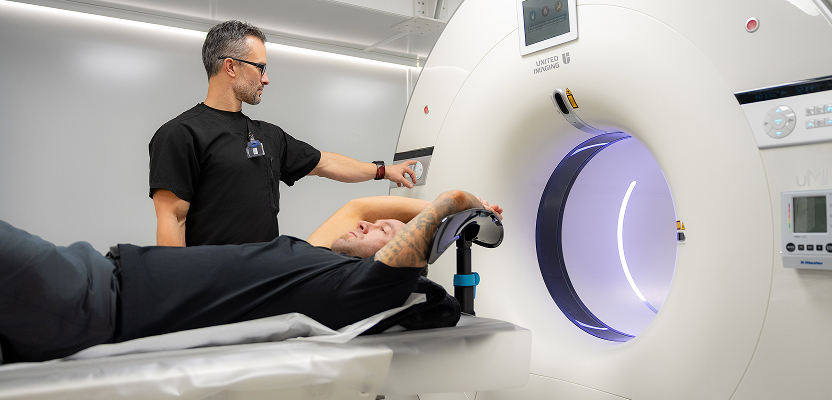
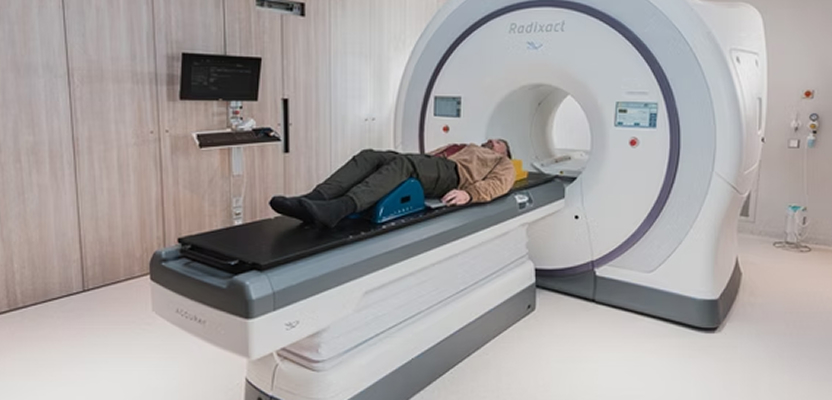
One of the biggest barriers to cardiac PET adoption has been the upfront cost. A new PET/CT scanner runs over $1 million. Rubidium-82 generator leases cost $30,000-$40,000 per month. Annual service contracts add $110,000-$160,000. Facility modifications for a 12,000-14,000 lb scanner aren't cheap either.
Mobile cardiac PET eliminates most of these barriers. With a mobile service model:
- No scanner purchase — the mobile unit arrives fully equipped
- No generator lease — the radiopharmaceutical comes with the service
- No facility renovation — the unit operates in your parking area
- No staffing headaches — the mobile team includes credentialed technologists and a paramedic, addressing the nationwide nuclear medicine technologist shortage that's making it increasingly difficult and expensive to hire full-time imaging staff
- Flexible scheduling — start with 1-2 days per month and scale based on demand
You capture the reimbursement. We handle the logistics. The question isn't whether cardiac PET is financially viable — at $2,710.86 per patient vs. $653.52 for SPECT, the math is overwhelming. The question is how quickly you can start.
What the Guidelines Say: Why Now
If you've been on the fence about PET, the clinical landscape has shifted decisively:
- ASNC's January 2026 position statement now recommends cardiac PET for all patients with suspected CAD who are candidates for myocardial perfusion imaging — not just select scenarios.
- Cardiac PET is now the second most used imaging modality for CAD evaluation, trailing only SPECT, with ~25% volume growth from 2018-2022.
- New international guidelines for Flyrcado were published in September 2025 by ASNC, SNMMI, EANM, and ACNM, providing protocol recommendations for the new radiotracer.
- The cardiac PET market is projected to grow from $1.98 billion in 2026 to $2.83 billion by 2034 at a 4.55% CAGR.
The clinical evidence, the reimbursement advantage, and the guideline support have never been more aligned. Practices that adopt PET now are positioning themselves at the front of a wave that's only getting bigger.
Ready to See the Numbers for Your Practice?
Every practice is different. Your reimbursement will depend on your geographic locality, payer mix, patient volume, and the specific protocols you run.
Or, if you'd prefer to talk through the numbers with someone who's been doing this for 18 years and processes 2,000 cardiac imaging studies per month: Schedule a free practice assessment with VIP Imaging.
VIP Imaging is the largest mobile nuclear cardiac imaging company in the western United States, providing PET/CT and SPECT services to cardiology practices across California, Arizona, and Texas. We've been in business for 18 years, we process 2,000 patients per month, and we work exclusively with cardiologists. Learn more at vipimaging.com.